
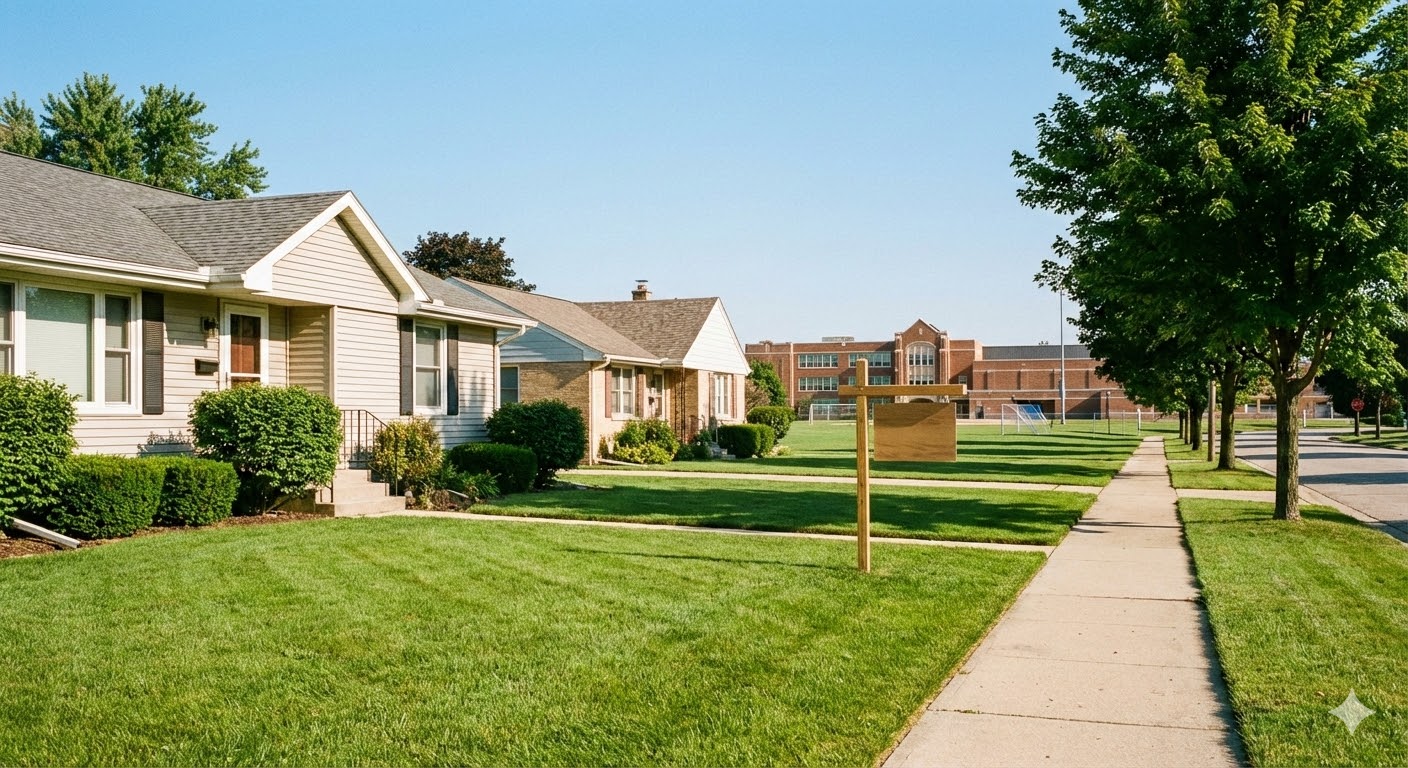
Understanding School District Boundaries and How They Affect Home Values
School district boundaries play a surprisingly powerful role in real estate. Learn how attendance zones are drawn, why they shift home prices by 10-20%, and how AI tools like SchoolZone.ai help parents and buyers make smarter decisions.
When you are shopping for a home, the neighborhood, square footage, and curb appeal probably top your checklist. But there is an invisible line running through nearly every community in America that can swing a home's price by tens of thousands of dollars: the school district boundary.
Whether you have school-aged children or not, understanding how these boundaries work—and how they influence property values—can save you money, protect your investment, and help you find the right community.
What Are School District Boundaries?
School district boundaries are geographic lines drawn by local education agencies that determine which public schools a child will attend based on their home address. Every residential property in the United States falls within a specific school district, and within that district, individual attendance zones assign students to particular elementary, middle, and high schools.
These boundaries are not permanent. Districts redraw them periodically in response to population growth, new school construction, school closures, and equity initiatives aimed at balancing enrollment or socioeconomic diversity.
How Boundaries Are Determined
School boards and district administrators typically set attendance boundaries using a combination of factors:
- Geographic proximity — Students are generally assigned to the nearest school to minimize transportation costs and commute times.
- School capacity — Boundaries shift when one school becomes overcrowded while a neighboring campus has open seats.
- Demographic balance — Many districts aim to maintain diverse student bodies across racial, ethnic, and socioeconomic lines.
- Infrastructure and roads — Natural dividers like highways, rivers, and railroad tracks often serve as convenient boundary lines.
- Community input — Most rezoning processes include public hearings where parents and residents can voice concerns.
The result is a patchwork of zones that can place homes on the same street into entirely different school assignments.
The Price Tag: How School Districts Affect Home Values
Real estate professionals have long understood the connection between school quality and property prices. Research consistently shows that homes in highly rated school districts command a premium of 10 to 20 percent over comparable properties in lower-rated districts.
A 2025 analysis by Pacific Appraisers found that districts with strong academic reputations and robust extracurricular programs attract families willing to pay significantly more for homes within their boundaries. In some competitive markets, the premium is even steeper. Homes in Catalina Foothills Unified School District in Arizona, for example, carry a 10 to 15 percent price bump tied directly to the district's top-one-percent state ranking.
Why the Premium Exists
Several forces drive this phenomenon:
- Demand concentration — Families with children actively seek homes in top-rated school zones, creating more competition and higher prices in those areas.
- Perceived investment safety — Even buyers without children recognize that a desirable school zone boosts future resale value.
- Property tax feedback loop — Higher home values generate more property tax revenue, which funds better-resourced schools, which in turn attract more buyers. It is a self-reinforcing cycle.
- Limited supply — Attendance zones are fixed geographic areas. You cannot simply choose to attend a better school without living within its boundary, which constrains supply and drives prices up.
When Boundaries Change: The Rezoning Effect
School rezoning is one of the most disruptive events in local real estate. When a district redraws attendance boundaries, the financial consequences can be immediate and significant.
What Triggers Rezoning
- New school construction — Opening a new campus means carving out a new attendance zone from existing ones.
- Enrollment shifts — Rapid population growth in one area may overcrowd schools while others sit half-empty.
- School closures — Budget cuts or declining enrollment can force consolidations that reshape boundaries.
- Equity goals — Districts may redraw lines to reduce achievement gaps or integrate socioeconomically diverse populations.
Financial Impact of Rezoning
When a home is rezoned from a highly rated school to a lower-rated one, property values can decline. Conversely, being rezoned into a top-performing school's attendance area can instantly increase a home's market value.
According to real estate data from Raleigh Realty, zone stability is a critical factor for buyers. District boundaries can change, and being grandfathered into a desirable school does not always transfer to new homeowners. This uncertainty creates risk for both buyers and sellers.
For homeowners, the key takeaway is clear: stay informed about your district's rezoning plans. Attend school board meetings, monitor local news, and factor boundary stability into your buying decisions.
The Property Tax Connection
School district boundaries do not just affect home prices—they also determine your property tax rate. In most states, a significant portion of property taxes funds local public schools. Different districts set different tax rates, which means two homes of identical value on opposite sides of a boundary line may have very different annual tax bills.
This creates an important consideration for buyers: a home in a highly rated district may come with a higher purchase price and higher annual taxes. However, the long-term appreciation and resale value often more than offset the additional cost.
As Public School Review noted in a 2025 analysis, the relationship between property taxes and school quality creates a cycle where wealthier neighborhoods generate more funding for nearby schools. Understanding this dynamic helps buyers make more informed financial decisions.
How to Research School District Boundaries Before You Buy
Knowing which school zone a property falls in is essential homework for any homebuyer. Here is how to do your due diligence:
1. Check Official District Maps
Every school district publishes attendance zone maps, usually on their website. These maps show exactly which schools serve each address. Be sure to check elementary, middle, and high school assignments separately, as they often have different boundaries.
2. Verify with the District Directly
Online maps can be outdated. Call or email the district's enrollment office to confirm the current school assignment for a specific address, especially if the home is near a boundary line.
3. Research Upcoming Rezoning
Ask the district whether any boundary changes are planned or under discussion. School board meeting minutes and agendas are public records and often reveal rezoning proposals months before they take effect.
4. Look Beyond Ratings
School ratings from sites like GreatSchools and Niche are useful starting points, but they do not tell the whole story. Visit schools in person, review state report cards, and talk to parents in the community for a fuller picture.
5. Use AI-Powered School Search Tools
Modern platforms like SchoolZone.ai are transforming how parents and homebuyers evaluate schools. Instead of manually cross-referencing addresses with district maps and rating sites, SchoolZone.ai uses artificial intelligence to analyze school quality across multiple dimensions—academics, safety, diversity, extracurriculars, and more—giving you a comprehensive, data-driven view of any school in the country.
SchoolZone.ai also provides fair, unbiased ratings that go beyond simple test score averages, helping you understand the true quality of education at each school. For homebuyers, this means faster, smarter decisions about which neighborhoods align with your family's educational priorities.
School Choice and Its Impact on Boundaries
The traditional model of rigid attendance boundaries is evolving. Many states now offer school choice programs that allow families to attend schools outside their assigned zone:
- Open enrollment — Some districts allow intra-district or inter-district transfers, letting students attend any school with available space.
- Magnet schools — Specialized programs that draw students from across the district regardless of where they live.
- Charter schools — Publicly funded but independently operated schools that are not bound by traditional attendance zones.
- Voucher programs — State-funded scholarships that let families apply public education dollars toward private school tuition.
While these options expand educational access, they have not eliminated the home value premium associated with top school zones. Most families still prefer the certainty and convenience of attending their neighborhood school, and the real estate market continues to price that preference into home values.
What This Means for Different Buyers
Families with Children
For families, school district boundaries are often the single most important factor in choosing where to live. Prioritize boundary stability, research upcoming rezoning, and use tools like SchoolZone.ai to evaluate all the schools in your target area before making an offer.
Investors and Flippers
Real estate investors should pay close attention to school boundaries because they directly affect rental demand and resale value. Properties in desirable school zones rent faster and command higher monthly rates. Keep an eye on rezoning proposals—a boundary change can create buying opportunities in areas about to be assigned to better schools.
Empty Nesters and Retirees
Even if you do not have children in school, the district your home falls in matters for resale. When it comes time to sell, families will be evaluating your home based on its school assignment. Buying in a strong district protects your investment regardless of your personal school needs.
The Future of School Boundaries
Several trends are reshaping how school boundaries function in the real estate market:
- AI and data transparency — Tools like SchoolZone.ai are making school quality data more accessible and nuanced, helping buyers make better-informed decisions.
- Remote learning legacy — The pandemic accelerated virtual and hybrid learning options, which may gradually loosen the geographic lock of attendance boundaries.
- Equity-focused redistricting — More districts are using boundary changes to address socioeconomic and racial segregation, which can shift property values in unexpected ways.
- Housing affordability — As the gap between affordable housing and desirable school zones widens, expect continued policy debates about how to balance educational access with market dynamics.
Key Takeaways
School district boundaries are one of the most powerful yet underappreciated forces in real estate. They determine which schools your children attend, how much property tax you pay, and how much your home is worth—both today and when you sell.
Here is what to remember:
- Homes in top-rated school districts typically sell for 10 to 20 percent more than comparable homes in lower-rated districts.
- Boundaries are not permanent. Rezoning can raise or lower your home's value overnight.
- Property taxes and school funding are tightly linked, creating self-reinforcing cycles of quality and value.
- Always verify school assignments directly with the district before buying.
- Use AI-powered tools like SchoolZone.ai to get comprehensive, unbiased school evaluations that go beyond basic ratings.
Whether you are buying your first home, investing in rental properties, or planning your next move, understanding school district boundaries gives you a critical edge in one of the biggest financial decisions of your life.