
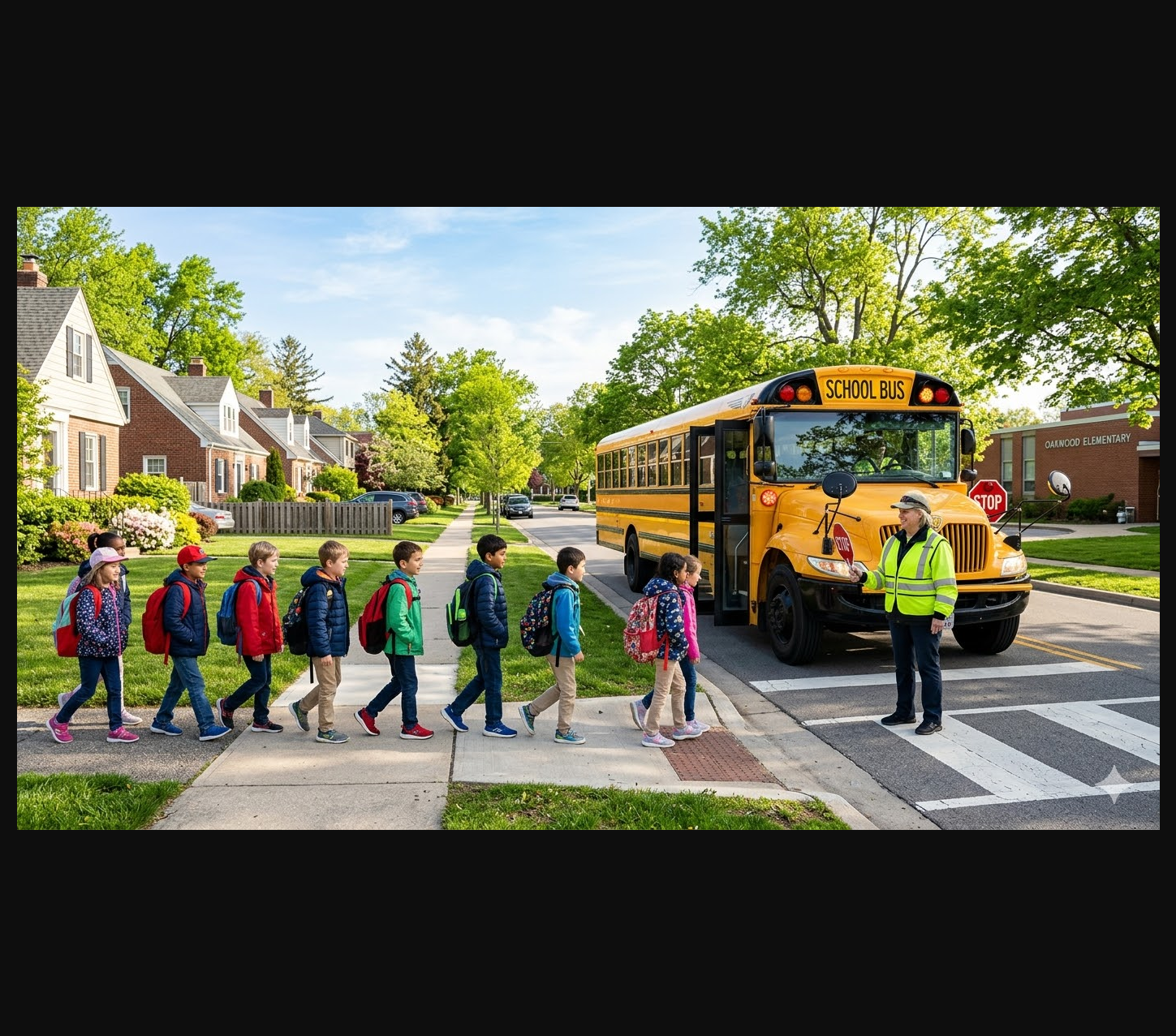
School Bus Safety and Transportation: A Parent's Complete Guide
Everything parents need to know about school bus safety, from teaching kids bus stop rules and understanding stop-arm laws to navigating GPS tracking apps, alternative transportation options, and choosing the safest routes to school.
Every school day, approximately 26 million children in the United States step onto a yellow school bus. It's such a routine part of American life that most parents barely think about it — until something goes wrong. A near-miss at the bus stop, a news headline about a stop-arm violation, or a child's anxious first ride can quickly move school transportation to the top of a parent's worry list.
The good news? School buses remain the safest form of ground transportation for students, according to the National Highway Traffic Safety Administration (NHTSA). Students are roughly 70 times more likely to arrive safely at school on a bus than in a passenger car. But "safest" doesn't mean risk-free, and informed parents can make the experience even safer.
This guide covers everything you need to know — from bus stop behavior and stop-arm laws to GPS tracking technology, alternative transportation options, and how to evaluate your school's transportation program.
Why School Buses Are the Safest Option
Before diving into safety tips, it's worth understanding why school buses have such an impressive safety record. It's not an accident — it's engineering.
Built Like a Tank (Almost)
School buses are designed to a higher safety standard than virtually any other vehicle on the road. Key features include:
- Compartmentalization: The closely-spaced, high-backed, energy-absorbing seats create a protective "compartment" around each child. This passive restraint system is why most school buses don't have seat belts (though that's changing — more on this below).
- Rollover protection: The roof structure is designed to support 1.5 times the bus's weight, protecting passengers in the event of a rollover.
- High visibility: That distinctive yellow color (officially "National School Bus Glossy Yellow") was chosen in 1939 because it's the most visible color in early morning and late afternoon light — the exact times buses operate.
- Mirror systems: Modern school buses have a complex mirror system that gives drivers visibility around the entire vehicle, including a crossover mirror designed to show the danger zone directly in front of the bus.
The Driver Factor
School bus drivers must hold a Commercial Driver's License (CDL) with a school bus endorsement. They undergo more rigorous training, background checks, and regular drug testing than typical commercial drivers. Most states require annual refresher training and regular driving record reviews.
The Danger Zone: Where Most Bus-Related Injuries Happen
Here's a sobering statistic: the majority of school bus-related fatalities don't happen on the bus — they happen outside it. According to NHTSA data, an average of seven school-age pedestrians are killed by school buses each year, and most of these incidents occur when children are in the "danger zone."
The danger zone extends 10 feet in all directions around the bus — the area where the driver has limited or no visibility. Understanding this zone is the single most important safety lesson you can teach your child.
Teaching Your Child About the Danger Zone
Make this a conversation, not a lecture. Here's what every child should know:
- The 10-foot rule: Stay at least 10 giant steps (about 10 feet) away from the bus at all times. If you can touch the bus, you're too close.
- Wait for the driver's signal: Never approach the bus until the driver opens the door and signals that it's safe to board.
- Cross in front, never behind: If you must cross the street, always cross at least 10 feet in front of the bus where the driver can see you. Never walk behind a school bus.
- Make eye contact: Before crossing in front of the bus, make eye contact with the driver. If you can't see the driver, the driver can't see you.
- Drop it and leave it: If you drop something near the bus, don't pick it up. Tell the driver. Bending down in the danger zone makes you invisible to the driver.
Bus Stop Safety: Rules Every Family Should Follow
The bus stop is where safety starts, and it's an area where parents can make a meaningful difference.
Arrival and Waiting
- Arrive five minutes early. Rushing to catch the bus leads to dangerous behavior — running near traffic, ignoring surroundings, and entering the danger zone without thinking.
- Stand at least three giant steps back from the curb or road edge. Horseplay near the road is a non-negotiable safety rule.
- Wear visible clothing. In fall and winter months when morning pickup happens in dim light, reflective strips on backpacks or bright outer layers help drivers and motorists see your child.
- Supervise young children. Children under 10 should be supervised at the bus stop by an adult or responsible older sibling.
Boarding and Exiting
- Wait for the bus to come to a complete stop before approaching. The red lights should be flashing and the stop arm extended.
- Use the handrail when boarding and exiting. Falls on the bus steps are one of the most common school bus injuries.
- Check for loose clothing, drawstrings, and backpack straps. These can get caught in the handrail or door, creating a dangerous situation as the bus pulls away. Ensure backpack straps are tight and drawstrings are tucked in.
- Walk, don't run. This applies to approaching the bus, boarding, exiting, and walking away from the bus stop.
Stop-Arm Laws: What Every Driver Needs to Know
If you're a parent who also drives, understanding stop-arm laws is critical — both for your own compliance and to protect other people's children.
The Basic Rule
When a school bus extends its stop arm and activates its red flashing lights, all traffic in both directions must stop. This is the law in every state, though the specifics vary.
State-by-State Variations
While the core requirement is universal, enforcement and exceptions differ:
- Most states require traffic in both directions to stop on undivided roads.
- On divided highways (with a physical median or barrier), vehicles traveling in the opposite direction may not be required to stop in some states. However, many states require all traffic to stop regardless of the road type.
- Penalties range from $250 fines to $1,000+ and license suspension. Some states have implemented felony charges for repeat offenders or violations that result in injury.
The Alarming Reality of Stop-Arm Violations
The National Association of State Directors of Pupil Transportation Services conducts an annual survey of stop-arm violations. Their findings are consistently alarming: in a single day across the country, school bus drivers report an estimated 95,000 vehicles illegally passing stopped school buses.
That's not a typo. Nearly 100,000 drivers per day are putting children's lives at risk.
Stop-Arm Camera Programs
In response to this epidemic of violations, many school districts have installed stop-arm cameras on their buses. These automated systems photograph or video-record vehicles that illegally pass a stopped school bus, enabling law enforcement to issue citations by mail.
As of 2026, more than 25 states have authorized the use of stop-arm cameras, and the programs are showing results. Districts that have implemented camera systems report significant reductions in violations — some by as much as 50% after the first year.
Technology and School Bus Safety in 2026
School transportation has entered the digital age. Here's what's available and what to look for in your district.
GPS Tracking and Parent Apps
One of the biggest quality-of-life improvements in school transportation has been real-time bus tracking apps. Many districts now offer apps that let parents:
- See the bus's exact location on a map in real time
- Receive notifications when the bus is approaching your stop
- Get alerts for delays, route changes, or cancellations
- View estimated arrival times that update dynamically based on traffic and conditions
Popular platforms include Here Comes the Bus, Zum, First Student's FirstView, and district-specific apps. If your district offers one, download it — it eliminates the guessing game of when to send your child to the stop.
Onboard Safety Technology
Modern school buses increasingly feature:
- Interior cameras that record student behavior and can be reviewed if incidents occur
- Electronic pre-trip inspection systems that ensure drivers complete safety checks before every route
- Child-check systems that require the driver to walk to the back of the bus after each route, preventing children from being left aboard
- Automated student tracking using RFID cards or barcode scanning that logs when each child boards and exits
Three-Point Seat Belts
The seat belt debate on school buses has been ongoing for decades. As of 2026, several states — including California, Florida, New York, New Jersey, and Texas — require three-point seat belts on new school buses. Research from the National Transportation Safety Board (NTSB) supports seat belt installation, particularly for side-impact and rollover crashes where compartmentalization alone is less effective.
If your state or district hasn't adopted seat belts on buses, it's worth asking about their timeline and rationale.
Alternative Transportation Options
School buses aren't the only way to get your child to school. Depending on your community and circumstances, alternatives may be worth considering.
Walking and Biking
For families who live within a reasonable distance of school (generally under one mile for elementary, two miles for middle and high school), walking or biking has tremendous benefits:
- Physical activity: The CDC recommends children get 60 minutes of physical activity daily. Walking or biking to school provides built-in exercise.
- Independence and confidence: Age-appropriate independent transportation builds life skills.
- Environmental impact: Fewer cars in the school zone means less pollution and congestion.
Safety considerations for walkers and bikers:
- Walk established routes with sidewalks whenever possible
- Cross only at marked crosswalks or intersections
- Wear a properly fitted helmet when biking (required by law for children in many states)
- Use the buddy system — children walking in groups are safer and more visible
- Practice the route together before your child walks independently
Many schools participate in Safe Routes to School programs, a federal initiative that funds infrastructure improvements (sidewalks, crosswalks, traffic signals) and education programs to make walking and biking safer.
Carpooling
Organized carpools can be an excellent option, especially for families whose schedules don't align with bus routes. Benefits include:
- Flexibility in pickup and drop-off times
- Social bonding for children and families
- Reduced traffic around schools
- Cost savings on fuel when shared among families
Several apps and platforms now facilitate school carpooling, including GoKid, HopSkipDrive, and school-organized carpool programs. When setting up a carpool, ensure all drivers have appropriate insurance, valid licenses, and clean driving records.
Private Transportation Services
Services like HopSkipDrive and Zum offer school-focused ride services with drivers who undergo enhanced background checks, including fingerprinting and multi-year driving record reviews. These services are designed specifically for children and provide parent-facing tracking apps, photo verification of drivers, and real-time ride monitoring.
While more expensive than public school buses, these services can be valuable for families with complex schedules, after-school activities, or situations where the school bus doesn't serve their area.
Evaluating Your School's Transportation Program
Not all school transportation programs are created equal. Here's how to assess yours.
Questions to Ask Your District
- What is the driver retention rate? High turnover can mean less experienced drivers and less consistent service. The national school bus driver shortage has pushed some districts to hire less experienced drivers or reduce routes.
- How are routes designed? Are stops located in safe areas away from busy intersections? Are walking distances to stops reasonable for your child's age?
- What training do drivers receive? Beyond the CDL requirement, what ongoing training is provided? Look for districts that invest in defensive driving, student management, and special needs transportation training.
- What technology is in place? GPS tracking, cameras, child-check systems, and stop-arm cameras are all indicators of a district that prioritizes safety.
- How are complaints handled? A responsive transportation department with clear procedures for addressing concerns is a good sign.
Red Flags to Watch For
- Frequent route changes or delays without communication
- Overcrowded buses where students are standing or sharing seats beyond capacity
- Bus stops located on busy roads without safe waiting areas
- Lack of communication channels between parents and the transportation department
- Drivers who are consistently late, rude, or appear fatigued
Special Needs Transportation
Children with disabilities have the legal right to appropriate transportation under the Individuals with Disabilities Education Act (IDEA). If your child has an IEP that specifies transportation as a related service, the district must provide:
- Door-to-door service if needed
- Wheelchair-accessible vehicles with proper securing equipment
- Trained attendants or monitors for students who require them
- Shorter ride times if specified in the IEP
- Air conditioning for students with medical conditions that require it
If your child's transportation needs aren't being met, you have the right to request an IEP meeting to address the issue. Document any concerns in writing and keep records of all communications with the district.
Preparing Your Child for Their First Bus Ride
Whether your child is starting kindergarten or switching to a new school, the first bus ride can be anxiety-inducing for both kids and parents.
Before the First Day
- Practice the walk to the bus stop several times so your child knows the route.
- Role-play bus behavior: sitting in the seat, keeping hands to themselves, using an inside voice, following the driver's instructions.
- Review safety rules using age-appropriate language: the danger zone, looking both ways, making eye contact with the driver.
- Introduce them to the bus driver if possible. Many districts offer bus orientation events before the school year starts.
- Write your contact information on a card in your child's backpack, including your phone number and the school's phone number.
The First Week
- Walk your child to the stop for the first few days, even if they'll eventually walk independently.
- Be at the stop for afternoon pickup before the bus arrives. Young children can panic if they exit the bus and don't see a familiar face.
- Ask about their experience each day. Listen for any concerns about other students, confusing stops, or interactions with the driver.
- Communicate with the driver. A quick, friendly introduction goes a long way in establishing a positive relationship.
How Technology Is Making School Routes Safer
School transportation is increasingly benefiting from AI and data-driven approaches. Tools like SchoolZone.ai help families understand their school options — including transportation logistics — by providing detailed information about school locations, attendance boundaries, and nearby alternatives.
When evaluating schools, transportation should be a factor in your decision. A school that's technically in your district but requires a 45-minute bus ride might be less practical than a closer alternative. SchoolZone.ai makes it easy to compare distances, explore nearby schools, and factor commute time into your school choice decision.
Emergency Preparedness
Every school district should have transportation emergency protocols. As a parent, know the answers to these questions:
- What happens if the bus breaks down? How are parents notified, and how quickly is a replacement dispatched?
- What if the bus is in an accident? What are the notification procedures, and where are children taken?
- How are severe weather decisions made? Who decides when routes are cancelled or delayed, and how is this communicated?
- What if your child gets on the wrong bus or misses their stop? What systems are in place to track and locate the child?
Most districts communicate emergencies through automated phone calls, text messages, and app notifications. Make sure your contact information is up to date and that you're enrolled in every available notification system.
Making School Transportation Work for Your Family
School transportation doesn't have to be a source of stress. With the right knowledge and preparation, it can be a safe, reliable, and even positive part of your child's school experience. The keys are simple: teach your child the safety fundamentals, stay engaged with your district's transportation program, leverage available technology, and don't hesitate to speak up when something isn't right.
Your child's safety on the way to and from school matters just as much as their safety inside the building. By taking the time to understand the system and prepare your family, you're ensuring that every school day starts and ends the way it should — safely.