
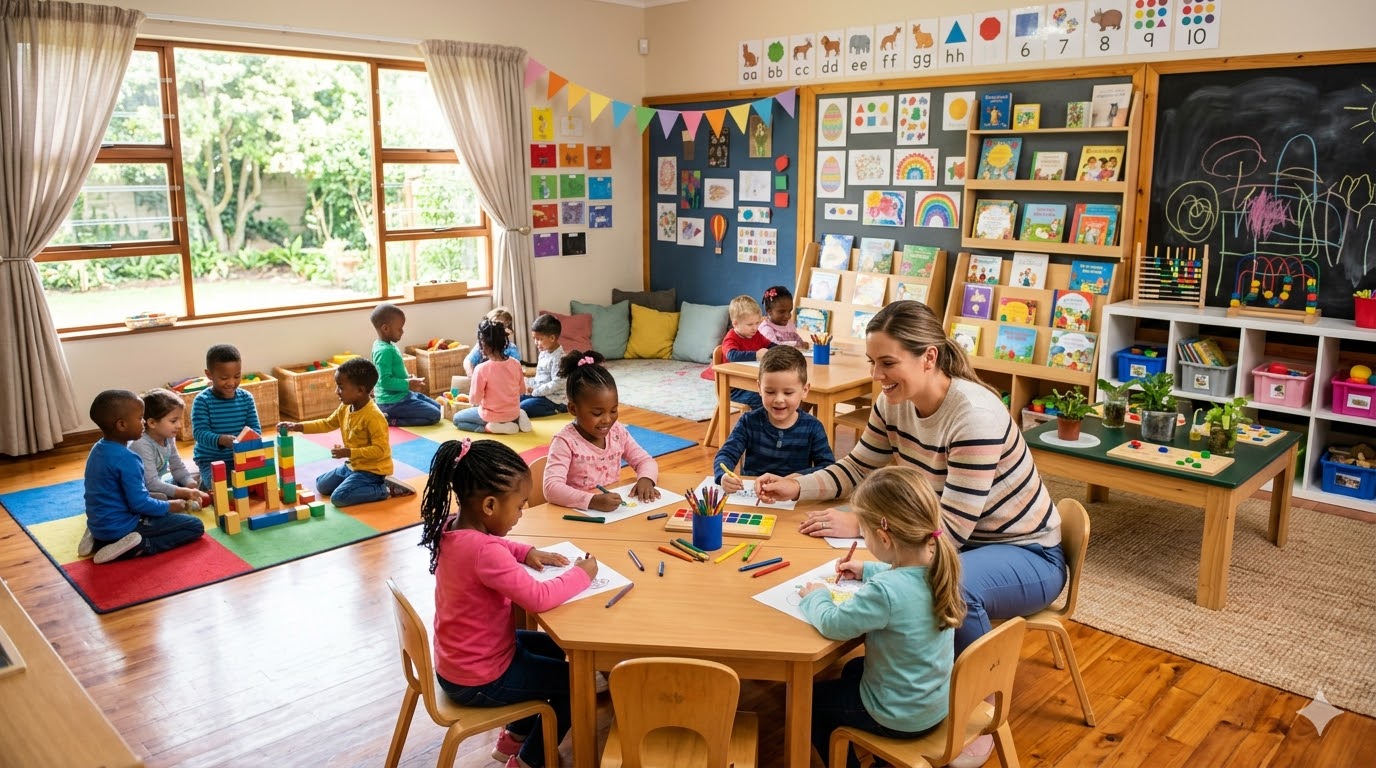
Kindergarten Readiness: How to Know If Your Child Is Ready for School
A comprehensive guide to kindergarten readiness covering the four key developmental domains — social-emotional, cognitive, physical, and language skills — plus practical tips to prepare your child for a successful start to school.
Every spring, millions of parents face the same question: is my child ready for kindergarten? It's a milestone that carries enormous weight — the official start of your child's academic journey. But readiness isn't just about knowing the ABCs or counting to ten. It's a complex blend of social, emotional, cognitive, and physical development that determines how well your child will thrive in a structured classroom environment.
Whether your child is turning five this summer or you're planning ahead for the 2026–2027 school year, understanding what kindergarten readiness truly means can help you make confident, informed decisions. In this comprehensive guide, we'll break down the key readiness indicators, explain what schools are actually looking for, and share practical strategies you can use at home to set your child up for success.
What Does "Kindergarten Ready" Actually Mean?
Kindergarten readiness doesn't mean your child needs to arrive at school already reading chapter books. The concept is far more nuanced than academic achievement alone. According to researchers at Michigan State University and the National Institute for Early Education Research, readiness encompasses four interconnected domains: cognitive development, social-emotional skills, physical development, and language and communication abilities.
Think of it this way — a child who can recite the alphabet but melts down every time they need to share a toy isn't necessarily more "ready" than a child who can't yet write their name but plays cooperatively, follows multi-step directions, and manages their emotions independently. Kindergarten teachers consistently report that social-emotional readiness is the single most important predictor of a successful transition to school.
The Four Pillars of Kindergarten Readiness
Social-Emotional Development
This is the domain that kindergarten teachers care about most, yet it's often the area parents overlook. Social-emotional readiness means your child can:
- Separate from caregivers without prolonged distress. Some initial hesitation is normal, but your child should be able to settle into activities relatively quickly.
- Follow basic classroom rules like taking turns, raising their hand, and waiting in line. These aren't skills children are born with — they develop through practice.
- Express emotions with words rather than hitting, biting, or throwing things. A child who can say "I'm frustrated" instead of having a meltdown is demonstrating critical emotional regulation.
- Play cooperatively with other children, including sharing materials, negotiating roles in pretend play, and resolving minor conflicts.
- Show empathy toward others — noticing when a classmate is sad and responding with kindness.
- Work independently on a task for 10–15 minutes without constant adult direction.
Parents can strengthen these skills through regular playdates, structured group activities, and conversations about feelings. When your child experiences a strong emotion, help them name it: "It looks like you're feeling disappointed because we can't go to the park right now."
Cognitive and Academic Skills
While academics aren't everything, there are baseline cognitive skills that help children engage meaningfully with kindergarten curriculum:
- Letter recognition: Can your child identify most uppercase letters? They don't need to know all 26, but recognizing 15–20 letters is a strong indicator of readiness.
- Number sense: Counting to 10 (or higher), recognizing written numerals 1–10, and understanding basic concepts like "more" and "less."
- Name writing: Being able to write their first name — even if the letters are wobbly or oversized — shows important fine motor and cognitive development.
- Color and shape recognition: Identifying basic colors (red, blue, green, yellow, etc.) and shapes (circle, square, triangle, rectangle).
- Pattern recognition: Noticing and continuing simple patterns (red-blue-red-blue).
- Curiosity and questioning: Does your child ask "why" about the world around them? Intellectual curiosity is one of the strongest predictors of academic success.
You don't need flashcards or formal lessons to build these skills. Read together daily — it's the single most impactful thing you can do. Point out letters on street signs, count items at the grocery store, and play sorting games with household objects.
Language and Communication
Strong language skills form the foundation for everything from reading comprehension to social interaction. By kindergarten entry, most children should be able to:
- Speak in complete sentences of five or more words.
- Tell a simple story with a beginning, middle, and end.
- Follow two- or three-step directions ("Put your shoes by the door, then wash your hands, then come to the table").
- Ask and answer questions about stories, experiences, or observations.
- Understand and use positional words like "above," "below," "beside," and "between."
- Rhyme — recognizing that "cat" and "hat" sound alike at the end.
If you're concerned about your child's language development, talk to your pediatrician. Early intervention for speech and language delays can make a significant difference, and many school districts offer free screenings for children approaching kindergarten age.
Physical Development
Kindergarten is surprisingly physical. Children need to navigate hallways, manage lunch trays, use the bathroom independently, and handle the fine motor demands of writing, cutting, and drawing. Key physical readiness indicators include:
- Fine motor skills: Holding a pencil or crayon with a proper grip, using scissors to cut along a line, stringing beads, and buttoning or zipping clothing.
- Gross motor skills: Running, hopping on one foot, climbing playground equipment, and throwing and catching a ball.
- Self-care independence: Using the bathroom independently (including wiping, flushing, and hand-washing), managing their own clothing, opening food containers, and blowing their nose.
- Stamina: The ability to stay active and engaged throughout a full school day, which may be six or more hours.
Activities like playing with playdough, drawing, building with blocks, and outdoor play all strengthen the motor skills your child will need in the classroom.
Understanding Age Cutoff Dates
One of the most practical aspects of kindergarten readiness is knowing whether your child meets the age requirements for your state. The most common kindergarten entry cutoff date in the United States is September 1st, used by 29 states. However, cutoff dates vary significantly:
- Earliest cutoffs: Indiana and Missouri use August 1st
- Latest cutoffs: Connecticut uses January 1st
- State-by-state variation: Some states allow individual school districts to set their own dates
For the 2026–2027 school year, your child typically needs to turn five years old on or before your state's cutoff date. If your child's birthday falls close to the cutoff, you may face the "redshirting" decision — whether to hold them back an extra year.
Research on redshirting is mixed. Some studies suggest that older kindergarteners have initial academic advantages, but these tend to fade by third grade. The most important factor isn't chronological age — it's your individual child's developmental readiness across all four domains we've discussed.
To find the specific cutoff date for your state and district, visit your state's Department of Education website or contact your local school directly. Many districts begin kindergarten registration in the spring, so now is the perfect time to start researching.
Red Flags: When to Consider Waiting
While every child develops at their own pace, certain signs may suggest your child could benefit from an additional year before starting kindergarten:
- Persistent difficulty separating from parents or caregivers, even in familiar settings
- Significant speech or language delays that haven't been addressed through intervention
- Inability to follow simple one- or two-step directions consistently
- Extreme difficulty with self-regulation — frequent, intense tantrums that are atypical for their age
- Limited interest in interacting with other children
- Major life changes happening simultaneously (new sibling, family move, parental divorce)
If you're on the fence, talk to your child's preschool teachers and pediatrician. Many school districts also offer kindergarten readiness assessments in the spring — take advantage of these free evaluations.
Green Lights: Signs Your Child Is Ready
On the flip side, these signs suggest your child is well-prepared for the kindergarten experience:
- They're excited about learning and ask questions about the world
- They can play with peers cooperatively for extended periods
- They handle transitions between activities without major resistance
- They can communicate needs clearly to adults and other children
- They show independence in self-care routines
- They can focus on a task for at least 10–15 minutes
- They recover from setbacks — a toppled block tower doesn't ruin their whole day
How to Prepare Your Child This Spring
If your child will be starting kindergarten this fall, here are practical, research-backed strategies to build readiness over the next few months:
Establish routines. Kindergarten runs on structure. Practice a consistent morning routine (wake up, get dressed, eat breakfast) and a bedtime routine that ensures your child gets 10–12 hours of sleep. If your child hasn't been in a structured program, start building predictability into their days now.
Read together every day. Aim for at least 20 minutes of shared reading daily. Ask questions about the story ("What do you think will happen next?"), point out letters and words, and let your child "read" to you by describing the pictures.
Practice independence. Let your child dress themselves, pour their own cereal, and clean up their own messes — even if it takes longer and isn't perfect. These self-care skills translate directly to classroom independence.
Play with other children. If your child isn't in preschool, arrange regular playdates or enroll them in a community program. Group play builds social skills that can't be learned in isolation.
Visit the school. Many kindergartens offer spring open houses or tours. Visiting the building, meeting the teacher, and seeing the classroom can dramatically reduce first-day anxiety.
Talk about school positively. Share your own happy school memories. Read books about starting kindergarten. Frame school as an exciting adventure, not something to fear.
Limit screen time. Research consistently shows that excessive screen time in early childhood is associated with attention difficulties and delayed language development. Replace some screen time with hands-on activities like building, drawing, cooking together, or outdoor exploration.
How SchoolZone.ai Can Help
Choosing the right kindergarten is just as important as ensuring your child is ready for one. SchoolZone.ai uses artificial intelligence to help parents find schools that match their child's specific needs and their family's priorities. Whether you're looking for a school with strong early literacy programs, robust special education support, or a particular teaching philosophy, SchoolZone.ai can help you compare options, understand school ratings, and make data-driven decisions about your child's education.
Our AI-powered platform analyzes thousands of data points — from test scores and teacher ratios to parent reviews and program offerings — to give you a complete picture of every school in your area. Because the right school isn't just the highest-rated one — it's the one that's the best fit for your child.
The Bottom Line
Kindergarten readiness isn't a checklist to pass or fail — it's a spectrum. Every child brings unique strengths to the classroom, and most kindergarten teachers are experts at meeting children exactly where they are. Your job as a parent isn't to create a "perfect" kindergartener. It's to nurture curiosity, build confidence, encourage independence, and provide a loving foundation from which your child can grow.
If you're feeling anxious about your child's readiness, take a breath. The fact that you're researching and thinking about this puts you ahead of the curve. Talk to your child's teachers, connect with your pediatrician, and trust what you know about your own child. You know them better than any checklist ever could.
Spring is the season of new beginnings — and kindergarten is one of the most exciting new beginnings of all.