
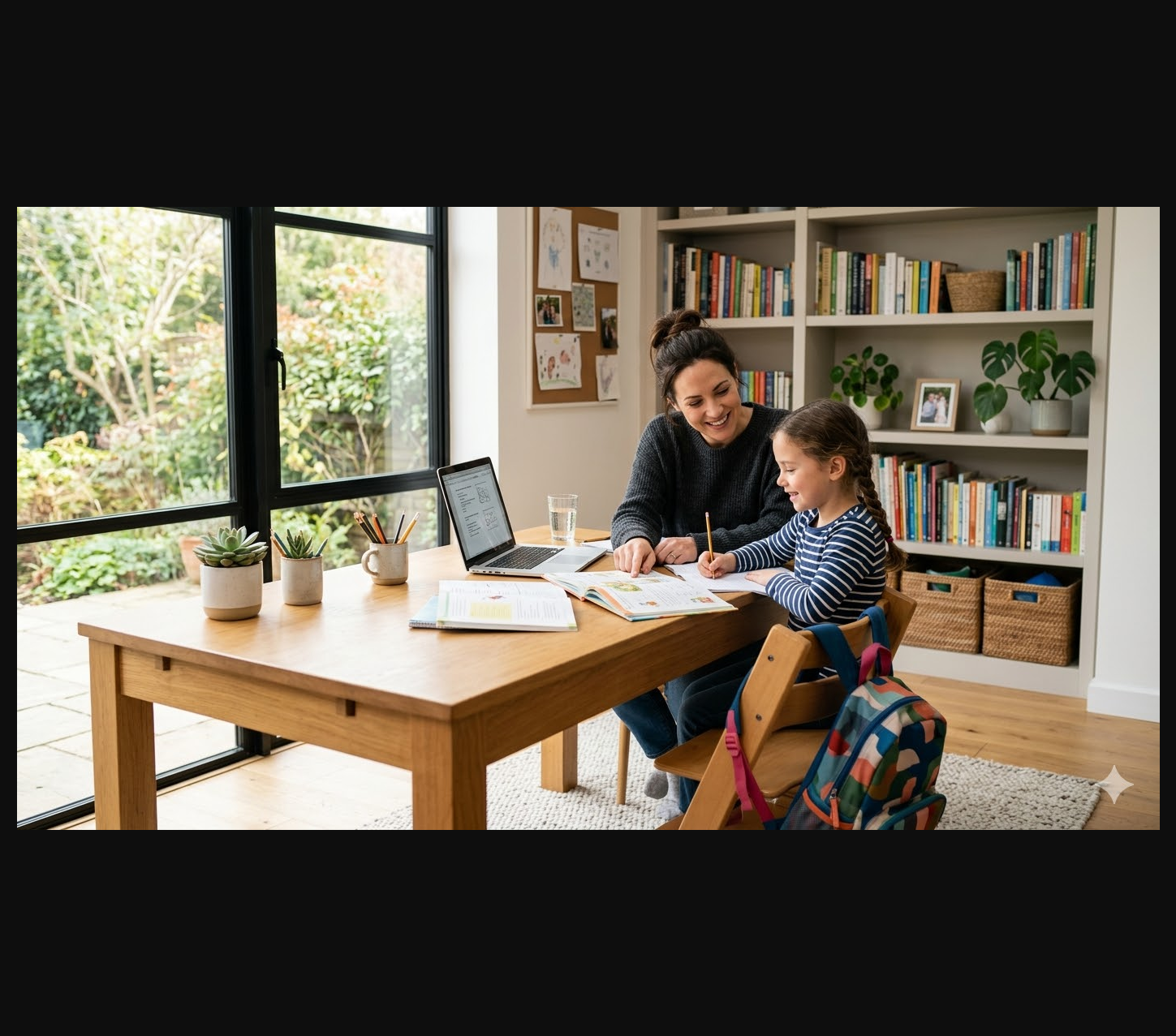
Homeschooling vs Public School: Making the Right Choice in 2026
Homeschool enrollment is surging past pandemic highs. Compare academics, socialization, costs, and flexibility to decide which path fits your family in 2026.
Choosing between homeschooling and public school has never been a simple decision — but in 2026, it is more nuanced than ever. Homeschool enrollment is shattering records, AI-powered curricula are closing resource gaps, and public schools are adapting with new technology of their own. Whether you are a parent weighing options for kindergarten or considering a mid-year switch for your high schooler, this guide breaks down everything you need to know.
The Homeschool Boom: By the Numbers
Homeschooling is no longer a fringe movement. According to Johns Hopkins University's Institute for Education Policy, homeschool enrollment grew at an average rate of 5.4 percent during the 2024-2025 school year — nearly triple the pre-pandemic growth rate of roughly 2 percent. Even more striking, 36 percent of reporting states recorded their highest homeschool enrollment ever, surpassing the pandemic-era spike that many experts predicted would be temporary.
The U.S. Census Bureau estimates approximately 54.1 million K-12 students in the 2025-2026 school year, with up to 7 percent — around 3.7 million children — now educated at home. In New York City alone, the number of homeschooled children increased 324 percent between 2017 and 2023. Cities like Chicago are seeing similar surges, with parents citing an explosion of online learning resources as a key factor.
This is not a pandemic blip. The growth is structural, fueled by dissatisfaction with traditional schooling, improved curriculum options, and the rise of hybrid learning models.
Academic Performance: What the Research Shows
One of the most compelling arguments for homeschooling lies in academic outcomes. The National Home Education Research Institute (NHERI) reports that homeschooled students typically score 15 to 25 percentile points higher on standardized achievement tests compared to their public school peers. The average homeschooled student scores at the 87th percentile, while the average public school student lands near the 50th.
A meta-analysis of 38 studies found that approximately two-thirds showed positive academic outcomes for homeschooled students, while roughly one-third showed mixed or neutral results. Only two studies found homeschoolers performing worse. Research from NHERI also found that Black homeschool students scored 23 to 42 percentile points above Black public school students, suggesting homeschooling can help narrow achievement gaps.
However, context matters. These statistics often reflect families who are highly motivated and invest significant time in their children's education. Public schools serve all students regardless of family resources, including those with learning disabilities, English language learners, and children from economically disadvantaged backgrounds.
Public schools also provide structured assessment frameworks, certified teachers, and accountability systems that ensure minimum standards are met — advantages that can be harder to replicate at home without careful planning.
The Socialization Question
No discussion of homeschooling is complete without addressing the elephant in the room: socialization. Critics have long argued that homeschooled children miss out on essential peer interactions. The reality in 2026, however, is more nuanced.
Modern homeschooling looks nothing like the isolated image many people picture. Today's homeschool families participate in co-ops, sports leagues, community classes, and online learning communities that provide regular social interaction. Many states now allow homeschooled students to participate in public school extracurricular activities, including sports teams and clubs.
Research from NHERI indicates that homeschool students are commonly involved in social and educational activities outside the home, and adults who were homeschooled tend to be more politically tolerant and civically engaged than their publicly schooled peers. A 2025 study published in Educational Studies followed formerly homeschooled young adults and found that most reported positive social development, though some noted challenges in navigating large institutional settings later in life.
Public schools, on the other hand, offer daily peer interaction with children from diverse backgrounds — an experience that is difficult to fully replicate in a homeschool setting. Group projects, cafeteria dynamics, and navigating social hierarchies all build real-world interpersonal skills.
The bottom line: socialization is not an inherent weakness of homeschooling, but it does require intentional effort from parents to ensure children have regular, meaningful interactions with peers.
Cost Comparison: What Will You Actually Spend?
Public school is funded by taxpayers and free at the point of enrollment, though parents typically spend $100 to $1,000 per year on supplies, technology, field trips, and after-school activities.
Homeschooling costs vary dramatically based on approach. According to multiple studies, the average annual expense ranges from $500 to $2,500 per student for curriculum materials, books, supplies, and enrichment activities. Premium online programs, private tutors, or specialized curricula can push costs to $3,500 or more.
But the real cost of homeschooling is often hidden in lost income. At least one parent typically needs to dedicate significant time to teaching, especially for younger children. For dual-income families, this can mean a substantial financial trade-off. The Home School Legal Defense Association (HSLDA) notes that homeschooling costs significantly less per child than private school tuition, but the opportunity cost of a parent's time is rarely factored into these comparisons.
In 2026, Education Savings Accounts (ESAs) and school choice voucher programs in many states are helping offset homeschooling costs. Several states now allow families to use public education funds for approved homeschool expenses, making the financial picture more favorable than ever.
Flexibility vs Structure: Different Strokes for Different Kids
One of homeschooling's greatest advantages is flexibility. Families can:
- Tailor curriculum to a child's learning style and pace
- Incorporate travel, real-world experiences, and passion projects
- Adjust schedules around family needs, medical situations, or seasonal activities
- Dive deeper into subjects that spark curiosity rather than racing through standardized timelines
For gifted students who are bored in traditional classrooms, or for children with learning differences who need a customized approach, homeschooling can be transformative.
Public schools offer a different kind of value through structure and accountability. Fixed schedules, deadlines, and external expectations teach time management and discipline. Certified teachers bring subject-matter expertise that most parents cannot match across all disciplines, particularly in advanced math, science, and foreign languages.
Public schools also provide access to specialized resources — science labs, music programs, libraries, counselors, and special education services — that would be prohibitively expensive to replicate at home.
The Role of Technology in 2026
Technology has dramatically leveled the playing field. AI-powered tutoring platforms now offer personalized instruction that adapts to each student's level in real time. Online courses from accredited providers give homeschooled students access to AP classes, foreign languages, and STEM programs that were once exclusive to well-funded school districts.
Public schools are also embracing technology. Many districts now offer one-to-one device programs, AI-assisted learning tools, and hybrid schedules that blend in-person and online instruction. The line between homeschooling and public schooling is blurring as both models incorporate digital learning.
For parents exploring their options, AI-powered school search tools like SchoolZone.ai can help you research and compare schools in your area based on academics, safety, extracurriculars, and more — giving you the data you need to make an informed decision regardless of which path you choose.
Hybrid Models: The Best of Both Worlds?
One of the fastest-growing trends in 2026 is hybrid education — models that combine elements of homeschooling and traditional schooling. These include:
- University-model schools where students attend classes two or three days per week and learn at home the rest
- Micro-schools — small, multi-age learning pods with a professional teacher
- Part-time enrollment programs that allow homeschoolers to take select public school classes
- Virtual public schools that provide accredited online instruction with certified teachers at no cost
These hybrid approaches let families customize their child's education while maintaining access to professional instruction and social opportunities. Many families find that a blended model addresses the limitations of both pure homeschooling and traditional public school.
Graduation Rates and College Readiness
One area where the data is more complex is graduation rates. Some estimates suggest homeschooled students have a high school completion rate of around 66.7 percent, compared to approximately 91 percent for public school students. However, this statistic is misleading because many states do not track homeschool graduation formally, and the definition of "completion" varies widely.
When it comes to college admissions, homeschooled students are increasingly competitive. A growing number of colleges and universities have dedicated admissions pathways for homeschooled applicants. A recent New York Magazine report highlighted that some families are now choosing homeschooling specifically for a perceived edge in college admissions, as it allows students to build unique portfolios, pursue deep interests, and demonstrate self-directed learning.
Homeschooled students who take standardized tests like the SAT or ACT tend to score at or above national averages, and many colleges report that homeschooled students perform well academically once enrolled.
Making the Decision: Key Questions to Ask
There is no universally right answer. The best choice depends on your family's unique circumstances. Ask yourself:
- Does my child thrive with structure or flexibility? Some children need the routine of a school day; others flourish with self-directed learning.
- Can I commit the time? Homeschooling requires significant parental involvement, especially for younger children.
- What resources are available in my area? Great public schools, homeschool co-ops, and hybrid programs vary by location.
- What are my child's social needs? Introverted children may prefer homeschool's quieter pace, while extroverts may crave the social buzz of a school campus.
- What does my budget look like? Factor in both direct costs and opportunity costs.
- What are the legal requirements in my state? Homeschool regulations vary significantly — some states require testing and curriculum approval, while others have minimal oversight.
How SchoolZone.ai Can Help
Whether you are leaning toward homeschooling, public school, or a hybrid approach, having good data is essential. SchoolZone.ai uses artificial intelligence to help parents research schools, compare options, and understand school zones in their area. Our platform provides detailed profiles of public, private, charter, and magnet schools — giving you the information you need to make the best choice for your child.
Visit SchoolZone.ai to explore schools near you and start your search today.
The Bottom Line
The homeschooling landscape in 2026 is richer, more accessible, and more diverse than ever before. Public schools continue to serve as the backbone of American education, providing free, structured learning for millions of children. Neither option is inherently superior — what matters is the fit between your child's needs, your family's resources, and the educational environment that will help them thrive.
The best school is the one where your child learns, grows, and feels supported. Use the data, trust your instincts, and remember that the choice is not permanent — families switch between models all the time, and that flexibility is one of the great strengths of American education in 2026.