
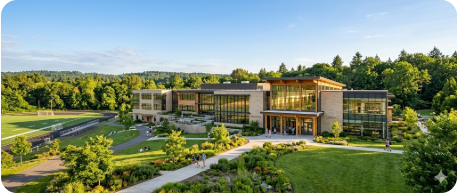
How Climate and Geography Affect School Design and Learning
From natural lighting to extreme weather closures, discover how climate and geography shape school architecture, student performance, and what parents should look for when choosing a school.
Every parent considers academics, extracurriculars, and teacher quality when choosing a school — but how often do we think about the building itself? The physical environment where children spend six to eight hours a day has a profound impact on how they learn, how they feel, and how well they perform. And that environment is shaped, more than most people realize, by climate and geography.
From sun-drenched classrooms in Arizona to snow-resilient structures in Minnesota, the interplay between a region's weather patterns and school architecture directly affects student outcomes. In 2026, as extreme weather events become more frequent and school design evolves with new technology, understanding this connection is more important than ever for parents navigating school choice.
Why School Design Matters More Than You Think
Research consistently shows that the physical learning environment accounts for a significant portion of student progress. A landmark study from the University of Salford found that classroom design can account for as much as 25% of a student's academic progress over the course of a school year. That's not a marginal difference — it's the equivalent of moving from an average classroom to one in the top quartile of design quality.
The factors that matter most include natural lighting, indoor air quality, temperature control, acoustic environment, and the overall layout of the space. Every single one of these is influenced by the climate and geography of the school's location.
When parents use tools like SchoolZone.ai to evaluate schools, they're often looking at test scores and ratings. But the physical infrastructure behind those numbers — including how well a building responds to its local climate — can be the hidden variable that explains why some schools consistently outperform others.
Natural Light: The Single Biggest Environmental Factor
If there's one design element that research keeps circling back to, it's natural light. Students in classrooms with abundant daylight consistently outperform their peers in windowless or poorly lit rooms.
A study conducted across 53 schools in 12 European countries found a direct correlation between window-to-room-area ratio and student achievement. The more natural light, the higher the grades — with one critical caveat. When direct sunlight caused glare without proper shading, test performance actually declined.
This is where geography creates stark differences:
- Schools in the Pacific Northwest must maximize every available ray of sunlight during overcast months, often using clerestory windows, light shelves, and reflective interior surfaces.
- Schools in the Sun Belt face the opposite challenge: managing intense solar gain while still admitting beneficial daylight. Overhangs, tinted glazing, and automated blinds are standard features.
- Northern schools at higher latitudes deal with dramatically shortened winter days. Some districts in Alaska have experimented with full-spectrum artificial lighting to combat seasonal mood changes in students.
For parents, the takeaway is practical: when visiting a school, notice the windows. Are classrooms bright during the day? Is there glare on whiteboards or screens? Does the building feel naturally lit or artificially harsh? These observations can tell you a lot about thoughtful (or thoughtless) design.
Temperature, HVAC, and the Comfort Zone
Thermal comfort is another area where climate shapes the learning experience in profound ways. The optimal temperature range for cognitive performance is generally between 68°F and 74°F (20°C–23°C). When classrooms fall outside this range, attention, memory, and problem-solving abilities all decline.
In hot climates — particularly across the southern United States — air conditioning isn't a luxury; it's a prerequisite for learning. Yet a surprising number of older schools still lack adequate cooling systems. During the 2024 heat waves, schools in Arizona, Georgia, Michigan, and Wisconsin were forced to close because indoor temperatures became unsafe.
Cold climates present their own challenges. Schools in the northern Midwest and New England must invest heavily in insulation, heating systems, and vestibule entries that prevent heat loss. The energy costs associated with heating a school in Minnesota through a six-month winter are staggering, and those costs directly compete with instructional budgets.
Modern school design is increasingly turning to passive strategies that work with the local climate rather than against it:
- Thermal mass construction in desert climates absorbs heat during the day and releases it at night, reducing cooling loads.
- Earth-sheltered designs in extreme climates use the ground's stable temperature as natural insulation.
- Cross-ventilation layouts in temperate and tropical zones reduce dependence on mechanical cooling.
- Green roofs in urban areas lower building temperatures while managing stormwater.
Extreme Weather and Lost Learning Time
One of the most direct ways climate affects education is through school closures. According to data from UndauntedK12, extreme weather events — including hurricanes, flooding, wildfires, extreme heat, and extreme cold — caused thousands of school closures across the United States between 2021 and 2025.
These aren't just inconveniences. Research from Education Week shows that weather disruptions compound existing learning gaps. Students in under-resourced districts are hit hardest because they're less likely to have access to effective remote learning alternatives and more likely to attend buildings without climate-resilient infrastructure.
Consider the geography of risk:
- Coastal schools in Florida, Louisiana, and the Carolinas face annual hurricane threats that can close schools for days or weeks.
- Western schools contend with wildfire smoke that degrades air quality even when fires are hundreds of miles away, triggering closures and forcing students indoors.
- Midwestern schools regularly lose days to polar vortex events, with wind chills dropping to -40°F or lower.
- Urban schools in heat-island areas experience temperatures 5–10°F higher than surrounding suburbs, making heat-related closures more likely.
For parents evaluating schools, it's worth asking: How many instructional days were lost to weather last year? Does the district have a robust remote learning plan? Has the building been retrofitted for climate resilience?
How Geography Shapes School Architecture Around the World
School design varies dramatically across geographic regions, and looking at global examples reveals just how much climate drives architectural choices.
Tropical Climates: Schools in Southeast Asia and Central America often feature open-air corridors, covered walkways, and elevated structures that promote airflow. In places like Costa Rica and Vietnam, school buildings are designed to breathe — with louvered walls, high ceilings, and shaded outdoor learning spaces that function as classrooms for much of the year.
Arid and Desert Climates: Schools in the Middle East and American Southwest use thick-walled construction, small windows on sun-facing facades, and interior courtyards that create shaded microclimates. In Phoenix, Arizona, some newer schools feature reflective roofing materials that reduce interior temperatures by up to 15°F compared to traditional dark roofs.
Cold and Subarctic Climates: Scandinavian school design has become a global model for cold-climate education. Finnish schools emphasize indoor air quality, biophilic design elements (bringing nature indoors), and carefully calibrated lighting systems that compensate for limited winter daylight. The result? Finland consistently ranks among the top nations in educational outcomes.
Temperate Climates: Schools in the mid-Atlantic and Pacific Northwest balance heating and cooling needs with flexible designs. Large windows, operable skylights, and hybrid HVAC systems allow these buildings to adapt to seasonal shifts without excessive energy use.
Sustainable School Design: The Climate-Responsive Future
The future of school architecture is climate-responsive by default. The ASHRAE Advanced Energy Design Guide for K-12 Schools provides specific recommendations for each U.S. climate zone, and an increasing number of districts are adopting net-zero energy targets for new construction.
Key trends shaping school design in 2026 include:
- Solar-integrated buildings with rooftop and canopy-mounted panels that generate electricity while providing shade.
- Living building standards that require schools to produce more energy than they consume and treat their own water.
- Resilience hubs that double as community shelters during extreme weather events, featuring backup power, water purification, and communication systems.
- AI-managed building systems that automatically adjust lighting, temperature, and ventilation based on occupancy, weather forecasts, and time of day.
- Biophilic design that incorporates natural materials, indoor plants, and views of nature to reduce stress and improve focus.
These aren't futuristic concepts — they're being built right now. Schools in California, Texas, and Massachusetts are leading the way with climate-responsive designs that improve both student outcomes and operational efficiency.
What Parents Can Do: Using Climate and Geography in School Choice
Understanding the relationship between climate, geography, and school design gives parents a practical edge when evaluating schools. Here's how to put this knowledge to work:
1. Check the Building Age and Renovation History. Older buildings are more likely to have poor insulation, inadequate HVAC systems, and limited natural lighting. Ask the school or district about recent renovations or planned upgrades.
2. Visit During Extreme Weather. If possible, tour a school during the hottest or coldest part of the year. How comfortable is the building? Can you hear the HVAC system struggling? Are hallways drafty or classrooms stuffy?
3. Look at Indoor Air Quality Data. Many districts now monitor CO2 levels and air quality in classrooms. High CO2 concentrations (above 1,000 ppm) indicate poor ventilation, which is linked to reduced cognitive performance.
4. Ask About Weather-Related Closures. Request data on how many school days were lost to weather events in recent years. Compare this across schools in your area.
5. Research the District's Sustainability Plan. Districts with active sustainability and resilience plans are more likely to maintain comfortable, healthy learning environments as climate conditions evolve.
6. Use Data-Driven Tools. Platforms like SchoolZone.ai help parents compare schools across multiple dimensions, making it easier to identify schools that invest in quality learning environments — not just test prep.
The Bottom Line
Climate and geography are invisible forces that shape every aspect of the school experience. From the amount of natural light streaming through classroom windows to the number of instructional days lost to extreme weather, where a school is located and how it's designed matter enormously.
As a parent, you can't control the weather. But you can choose schools that respond intelligently to their environment — buildings that keep students comfortable, healthy, and focused regardless of what's happening outside.
The best schools in 2026 aren't just academically excellent. They're architecturally excellent too, designed in harmony with their climate and geography to create the optimal conditions for learning. And increasingly, the data and tools exist to help you find them.
Looking for the best schools in your area? SchoolZone.ai uses AI to help parents discover, compare, and evaluate schools based on what matters most — including the learning environment itself.