
Bilingual and Dual-Language Schools: A Growing Trend in American Education
Dual-language and bilingual school programs are expanding rapidly across the United States. Learn about the academic, cognitive, and career benefits these programs offer, how to find one near you, and what parents should consider when evaluating bilingual education options.
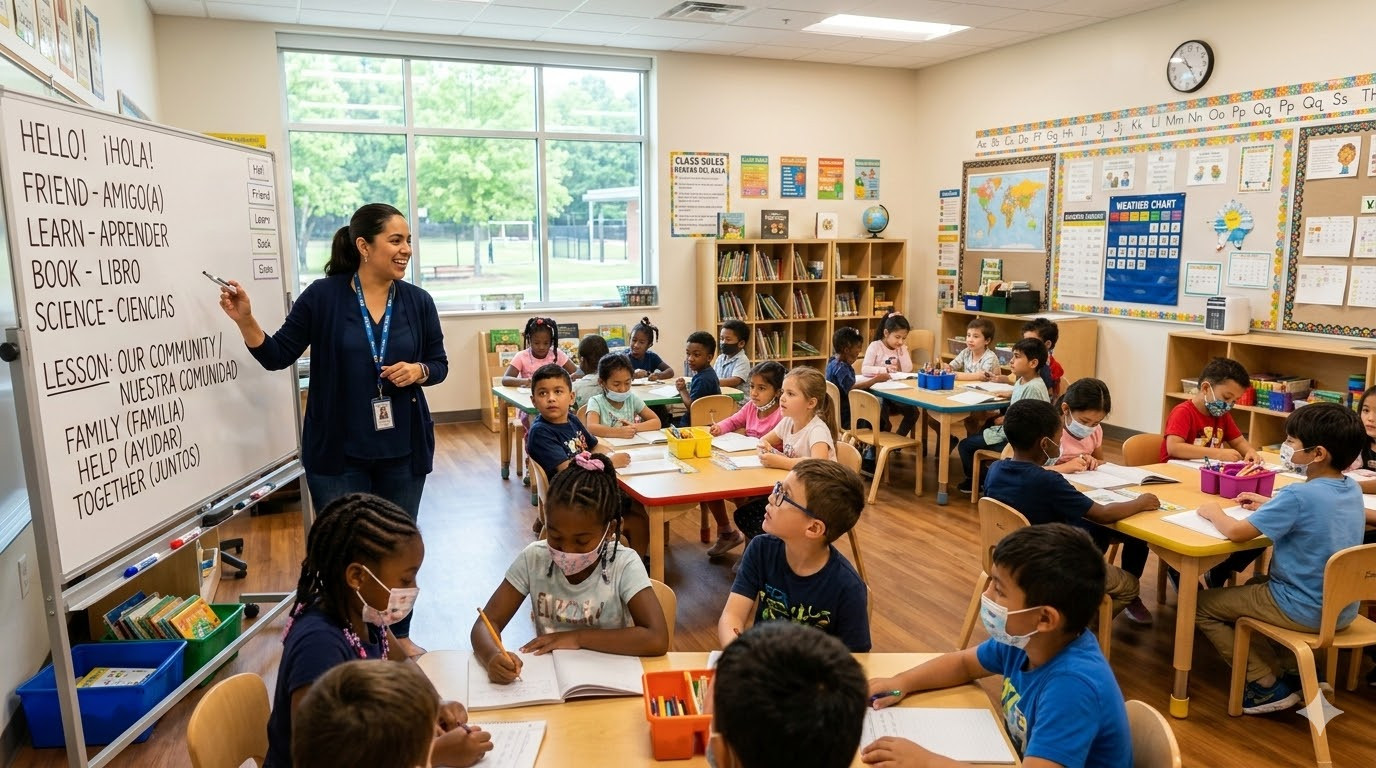
The American classroom is changing. Walk into a growing number of elementary schools across the country and you will hear students solving math problems in Spanish, discussing science experiments in Mandarin, or reading literature in French — all before lunchtime. Dual-language and bilingual education programs are experiencing a surge in popularity that shows no signs of slowing down, and for good reason.
Whether you are a parent exploring schooling options, a real estate buyer evaluating neighborhoods, or an educator curious about the movement, understanding the rise of bilingual education is essential in 2026.
What Are Dual-Language and Bilingual Schools?
Before diving into the trend, it helps to understand the terminology. While people sometimes use "bilingual" and "dual-language" interchangeably, there are important distinctions.
Bilingual education is a broad umbrella term for any instructional approach where students learn academic content in two languages. This includes:
- Transitional bilingual programs — designed primarily to help English learners (ELs) acquire English proficiency, gradually shifting instruction to English over time.
- Developmental bilingual programs — support heritage language maintenance while students build English skills.
- Dual-language immersion (DLI) programs — the fastest-growing model, where instruction is split between English and a partner language (often 50/50 or 90/10 in early grades), and the goal is full biliteracy for all students regardless of their home language.
Dual-language immersion programs are unique because they intentionally mix native English speakers with native speakers of the partner language in the same classroom. This creates a natural environment where students learn from each other.
The Numbers Behind the Growth
The expansion of dual-language programs in the United States has been remarkable. According to the American Councils for International Education, 44 states reported having dual-language immersion programs by 2021, with more than 3,600 DLI programs operating nationwide. That number has continued to climb.
California, Texas, New York, Utah, and North Carolina account for the largest concentrations of programs. But states that were once unlikely adopters — including Utah, Delaware, and Georgia — have invested heavily in dual-language initiatives over the past decade.
The demand is driven by multiple forces:
- Demographic shifts: Approximately 21 percent of U.S. students come from homes where a language other than English is spoken. Over 300 languages are represented in American public schools.
- Parent demand: Surveys consistently show that families — especially Latino families — actively seek bilingual education options. A 2025 poll highlighted by Education Week found that demand for dual-language programs far outpaces available seats in many districts.
- Workforce preparation: Employers increasingly value bilingual professionals. Studies estimate that bilingual workers earn between 5 and 20 percent more than monolingual peers, depending on the industry and language combination.
Academic Benefits: What the Research Says
One of the strongest arguments for dual-language education comes from decades of academic research. The findings are compelling and consistent.
Higher Academic Achievement
Students in well-implemented dual-language programs frequently outperform their peers in English-only settings — not just in language arts, but across all subjects. A landmark RAND Corporation study found that students in DLI programs in Portland, Oregon showed significantly higher reading achievement in English by middle school compared to similar students in traditional programs.
This might seem counterintuitive. How can spending half the school day learning in another language improve English performance? Researchers point to the transfer effect: skills learned in one language — reading comprehension, critical thinking, mathematical reasoning — transfer to the other language. Students are not learning less; they are learning more deeply.
Cognitive Advantages
Bilingual students consistently demonstrate enhanced executive functioning — the set of mental skills that includes working memory, flexible thinking, and self-control. Studies show that bilingual children are better at:
- Switching between tasks
- Filtering out irrelevant information
- Problem-solving in novel situations
- Sustaining attention over longer periods
Some researchers have even found evidence that lifelong bilingualism may delay the onset of cognitive decline and dementia by several years, though this research is still evolving.
Closing Achievement Gaps
Dual-language programs have shown particular promise for English learners. A 2024 study published in the journal Educational Researcher found that EL students in dual-language immersion programs showed greater reading growth over time compared to EL students in English-only classrooms. Rather than treating a student's home language as an obstacle, these programs leverage it as an asset.
Social and Cultural Benefits
The advantages of bilingual education extend well beyond test scores.
Cross-Cultural Understanding
In dual-language classrooms, students from different linguistic and cultural backgrounds work together daily. This fosters empathy, cultural awareness, and the ability to navigate diverse environments — skills that are increasingly valuable in a globalized world.
Heritage Language Preservation
For families who speak a language other than English at home, dual-language programs provide a structured way to maintain and strengthen that heritage language. Research shows that children who maintain strong connections to their heritage language have better relationships with family members, stronger cultural identity, and higher self-esteem.
Community Building
Dual-language programs often create tight-knit school communities where families from different backgrounds collaborate and connect. These programs can serve as bridges between communities that might otherwise remain separate.
Popular Language Pairings
While Spanish-English programs dominate the dual-language landscape (accounting for roughly 80 percent of all programs), other language pairings are growing:
- Mandarin-English: Increasingly popular in urban areas, driven by China's economic influence
- French-English: Common in Louisiana, New England, and areas with Haitian Creole-speaking populations
- Arabic-English: Growing in communities with significant Arabic-speaking populations
- Korean-English: Expanding in cities like Los Angeles and New York
- American Sign Language (ASL)-English: A unique and growing model that promotes accessibility
Challenges Facing Dual-Language Programs
Despite the enthusiasm, dual-language education faces real challenges that parents and educators should understand.
Teacher Shortages
The single biggest obstacle to expanding dual-language programs is the shortage of qualified bilingual teachers. Teaching in a dual-language setting requires not only fluency in both languages but also specialized training in bilingual pedagogy. Many districts report difficulty recruiting and retaining these educators, particularly for less common language pairings.
Equitable Access
As dual-language programs gain prestige, there is a growing concern about equity. In some districts, these programs have become magnets for affluent, English-speaking families — potentially displacing the very English learner populations the programs were designed to serve. Ensuring that dual-language programs remain accessible to all students, regardless of socioeconomic background, is an ongoing challenge.
Funding and Resources
Developing curriculum materials in two languages, providing professional development for teachers, and maintaining appropriate student ratios all require significant investment. While federal Title III funding supports English learners, dedicated funding for dual-language programs varies widely by state.
Program Quality Variation
Not all dual-language programs are created equal. The effectiveness of a program depends heavily on implementation quality, teacher preparation, curriculum design, and administrative support. Parents should ask detailed questions about a program's model, track record, and teacher qualifications before enrolling their child.
How to Find a Dual-Language School Near You
If you are interested in dual-language education for your child, here are practical steps to find and evaluate programs:
- Check your school district's website: Many districts list their magnet and dual-language program options online.
- Use SchoolZone.ai: Our platform helps parents explore schools in any neighborhood, including program offerings and school characteristics. You can search by location and filter for schools with specialized programs.
- Contact your state's Department of Education: Most state education agencies maintain directories of approved dual-language programs.
- Visit the Dual Language Schools directory: Organizations like DualLanguageSchools.org maintain searchable databases of programs nationwide.
- Attend open houses: Nothing replaces visiting a school in person. Observe classrooms, talk to teachers, and ask about student outcomes.
What Parents Should Ask Before Enrolling
When evaluating a dual-language program, consider asking these questions:
- What is the program model? (50/50, 90/10, or another split?)
- What is the partner language? Is it a language your family speaks at home or a new language for your child?
- What are the admission criteria? Some programs use lotteries; others prioritize neighborhood students or heritage speakers.
- What is the teacher retention rate? High turnover can disrupt program quality.
- What do student outcome data show? Ask for reading and math proficiency data compared to non-DLI students in the district.
- How does the program support students who struggle? Dual-language programs should have intervention strategies for students who need additional support in either language.
- Is the program a strand or a whole-school model? Whole-school models tend to create more cohesive bilingual environments.
The Policy Landscape in 2026
Federal and state policies continue to shape the bilingual education landscape:
- Federal support: The U.S. Department of Education's "Raise the Bar" initiative has emphasized pathways to multilingualism, signaling continued federal interest in expanding language programs.
- State-level growth: States like California (which reversed its English-only Proposition 227 in 2016), New York, and Texas have been leaders in expanding dual-language options. Utah's dual-language immersion program, launched in 2009, now serves tens of thousands of students across the state.
- Seal of Biliteracy: Now adopted by most states, the Seal of Biliteracy recognizes high school graduates who demonstrate proficiency in two or more languages. This credential appears on diplomas and transcripts, providing tangible recognition of bilingual achievement.
The Economic Argument
Beyond academic and cognitive benefits, there is a strong economic case for bilingual education:
- Bilingual employees earn an average of 5-20% more than monolingual peers
- Industries like healthcare, education, law, technology, and international business actively recruit bilingual professionals
- The global economy increasingly rewards multilingual communication skills
- Communities with strong bilingual education programs often see positive effects on local economic development and property values
Looking Ahead: The Future of Bilingual Education
The trajectory is clear: dual-language education will continue to expand across the United States. Several trends point to an even bigger role for bilingual programs:
- AI-assisted language learning: Technology is making it easier to supplement classroom instruction with personalized language practice
- Virtual exchange programs: Schools are connecting students across borders for collaborative bilingual projects
- Growing employer demand: As businesses expand globally, the premium on bilingual talent will only increase
- Demographic momentum: The increasing linguistic diversity of American communities creates natural demand for bilingual education
The question is no longer whether bilingual education works — decades of research have answered that definitively. The question now is how to make high-quality dual-language programs accessible to every family that wants them.
Find the Right School with SchoolZone.ai
Choosing a school is one of the most important decisions a family makes. Whether you are specifically looking for a dual-language program or simply exploring all the options in your area, SchoolZone.ai gives you the data and insights you need to make an informed choice.
Our AI-powered platform analyzes school data across the country, helping you compare schools by location, ratings, programs, and more. Start your search today and find the school that is the perfect fit for your child's future.