
After-School Programs: Finding Enrichment Activities in Your School Zone
Discover how after-school enrichment programs boost academic performance, build social skills, and keep kids engaged. Learn what to look for and how to find the best programs in your school zone.
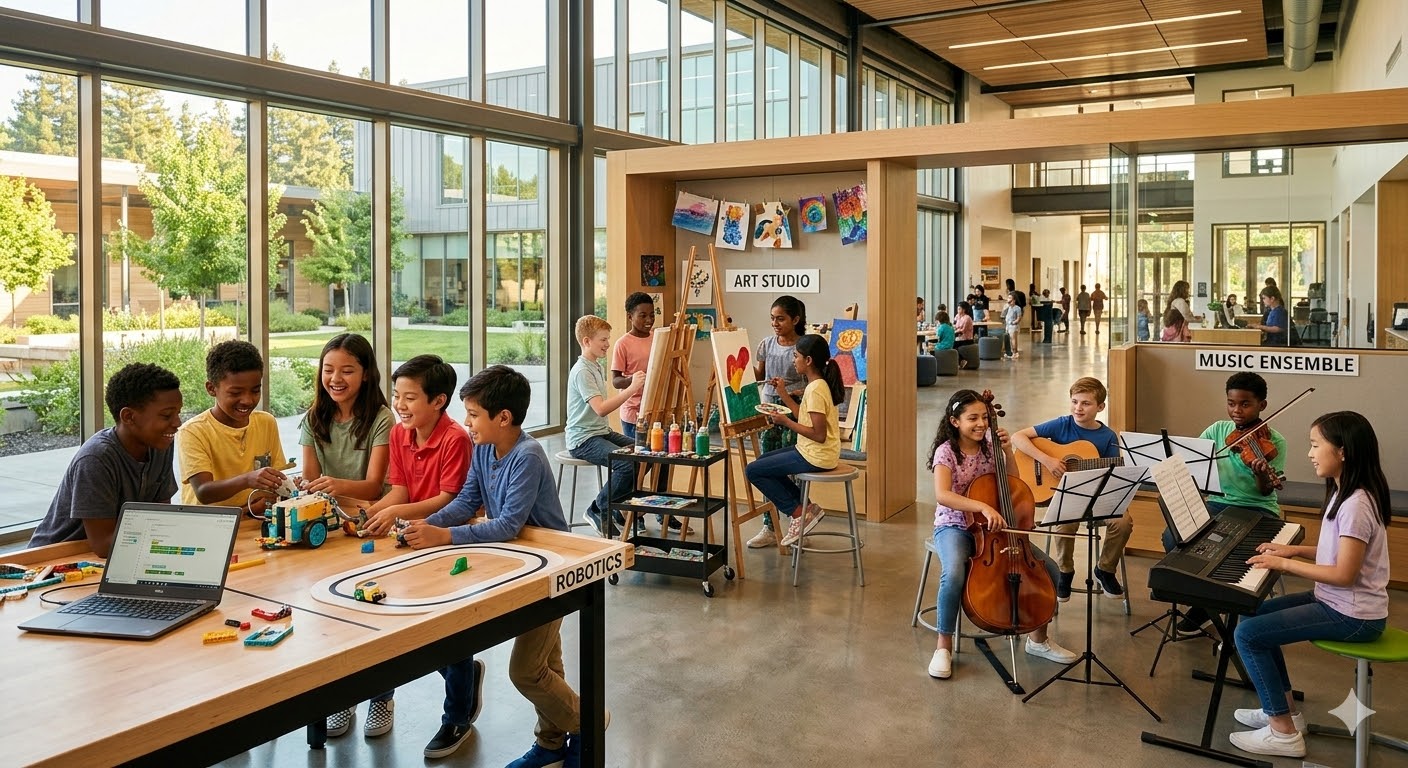
The final school bell rings at 3 PM, but for millions of American families, that's when the real question begins: what happens next? With 65% of K-8 parents enrolling their children in after-school activities according to a national survey by Learning Heroes, the demand for quality enrichment programs has never been higher. Whether you're a working parent seeking safe supervision or a family looking to spark your child's passion for robotics, music, or art, after-school programs have become an essential part of the modern education landscape.
Finding the right program in your school zone can feel overwhelming. From STEM clubs to performing arts, from homework help to competitive sports, the options are vast and varied. This guide breaks down everything you need to know about after-school enrichment programs, their proven benefits, and how to find the perfect fit for your child.
What Are After-School Enrichment Programs?
After-school enrichment programs are structured activities that take place outside of regular school hours, typically between 3 PM and 6 PM on weekdays. Unlike simple childcare or babysitting, these programs are designed to complement and extend classroom learning through hands-on, engaging experiences.
The Afterschool Alliance defines these programs as comprehensive offerings that may include academic support, arts and crafts, STEM projects, sports, music, community service, and social development activities. The key distinction is intentionality: enrichment programs have learning objectives, trained staff, and structured curricula that go beyond keeping kids occupied.
Common categories of after-school enrichment include:
- Academic enrichment: Tutoring, homework help, reading clubs, and math circles
- STEM programs: Robotics, coding, science experiments, and engineering challenges
- Arts and creativity: Visual arts, theater, dance, creative writing, and music lessons
- Sports and fitness: Team sports, martial arts, yoga, and outdoor recreation
- Language and culture: Foreign language clubs, sign language, and cultural exchange programs
- Life skills: Cooking, financial literacy, gardening, and leadership development
The Research-Backed Benefits of After-School Programs
The evidence supporting after-school enrichment is substantial and growing. A landmark report from the National Academies found that out-of-school programs serve as a critical bridge between school, home, and the community, offering structured environments where young people develop essential life skills.
Academic Performance
Research consistently shows that quality after-school programs improve academic outcomes. Students who participate regularly in structured enrichment activities demonstrate better grades, higher test scores, and improved school attendance. A meta-analysis published in the journal of Prevention Science found that after-school programs significantly reduce absenteeism and behavioral issues, particularly among at-risk youth.
The 21st Century Community Learning Centers, the largest federal funding source for after-school programs, has documented measurable improvements in reading and math proficiency among participants. Programs that balance homework help with hands-on enrichment activities tend to produce the strongest academic results.
STEM Attitudes and Career Pathways
After-school STEM programs have emerged as powerful equalizers in education. Research published in the International Journal of STEM Education found that quality after-school STEM programming significantly improves students' attitudes toward science, technology, engineering, and mathematics. This is particularly important for girls, students of color, and low-income youth who are historically underrepresented in STEM fields.
The Afterschool Alliance reviewed 19 evaluations of STEM after-school programs and identified consistent outcomes: increased interest in STEM careers, improved problem-solving skills, and greater confidence in tackling technical challenges. These programs often provide the inspirational, hands-on experiences that complement and supplement traditional classroom instruction.
Social-Emotional Development
Beyond academics, after-school programs foster critical social-emotional skills. Children learn teamwork, conflict resolution, time management, and self-regulation in a supportive environment. Programs staffed by individuals with training in youth development consistently produce better outcomes, including higher self-control ratings among participants.
The Boys & Girls Clubs of America reports that a mix of academic support and varied enrichment activities, including sports, arts, and STEM projects, produces the most well-rounded developmental benefits. Children who participate in these balanced programs show improved self-esteem, better peer relationships, and stronger leadership skills.
Safety and Supervision
For working families, after-school programs address a critical safety concern. The hours between 3 PM and 6 PM are when children are most vulnerable to risky behaviors, accidents, and negative influences. Quality after-school programs provide safe, supervised environments where children can thrive rather than simply pass the time.
Types of After-School Programs Available
School-Based Programs
Many schools offer on-site after-school programs, often funded through federal 21st Century Community Learning Center grants or local school district budgets. These programs are convenient since children don't need transportation, and they often have direct connections to classroom teachers who can align enrichment activities with school curricula.
School-based programs frequently offer a mix of homework help, academic clubs, and recreational activities. They may also partner with community organizations to bring in specialized instruction in areas like robotics, art, or music.
Community Organization Programs
Organizations like the Boys & Girls Clubs, YMCAs, and local community centers have long been pillars of after-school enrichment. These programs often serve a broader age range and offer more diverse activity options than school-based alternatives. Many operate on sliding-scale fee structures, making them accessible to families across income levels.
Private Enrichment Programs
Private after-school programs range from specialized academies (coding bootcamps, music conservatories, competitive sports training) to broader enrichment centers. While these tend to be more expensive, they often offer deeper expertise in specific areas and smaller class sizes. Programs like Kumon, Mathnasium, and Code Ninjas have expanded nationally, providing consistent curriculum frameworks across locations.
Faith-Based Programs
Churches, synagogues, mosques, and other religious organizations frequently offer after-school programs that combine academic support with values-based education. These programs often provide affordable or free options for families within their congregations and the broader community.
Virtual and Hybrid Programs
The growth of virtual learning has extended to after-school enrichment. Online coding classes, virtual art studios, and remote tutoring sessions offer flexibility for families with transportation challenges or those in rural areas with limited local options. Many programs now offer hybrid models that blend in-person and virtual components.
How to Find Quality Programs in Your School Zone
Start with Your School
Your child's school is the best first resource. Ask the front office, PTA, or school counselor about available after-school programs. Many schools maintain lists of approved enrichment providers that operate on campus or nearby.
Use Online Directories
Several platforms help parents find after-school programs by location:
- Afterschool Alliance (afterschoolalliance.org) maintains a national database of programs
- SchoolZone.ai provides comprehensive school zone information including nearby enrichment options and school ratings that help you understand the full educational ecosystem in your area
- Local parks and recreation department websites list municipal programs
- United Way 211 connects families with community resources including after-school programs
Check Quality Indicators
Not all programs are created equal. When evaluating after-school options, look for these quality markers:
Staff qualifications: Programs with trained youth development professionals produce better outcomes. Ask about staff credentials, background checks, and ongoing training requirements.
Structured curriculum: Quality programs have clear learning objectives and age-appropriate activities, not just free play or screen time. Ask to see a typical weekly schedule.
Student-to-staff ratios: Smaller ratios allow for more individualized attention. The National AfterSchool Association recommends ratios of 1:10 for school-age children, with lower ratios for younger kids.
Communication with families: Strong programs maintain regular communication with parents through newsletters, conferences, and digital platforms. They should be willing to share progress reports and address concerns promptly.
Alignment with school day: The best programs coordinate with classroom teachers to reinforce and extend what children are learning during the school day, rather than operating in isolation.
Safety protocols: Verify that programs have clear emergency procedures, health and safety policies, and secure check-in and check-out processes.
Consider Your Child's Interests and Needs
The most effective enrichment program is one that matches your child's interests and developmental needs. A child who struggles with reading might benefit from a literacy-focused program, while a natural leader might thrive in a youth development organization. Talk to your child about what excites them and involve them in the decision-making process.
For children with special needs, look for programs that offer inclusive environments with trained staff. Many community organizations provide adaptive programming, and your child's IEP team may have recommendations for suitable after-school options.
The Cost Factor: Making Enrichment Accessible
Cost remains one of the biggest barriers to after-school program participation. While some programs are free (particularly school-based and publicly funded options), others can cost hundreds of dollars per month. Here are strategies for managing costs:
- Scholarships and sliding-scale fees: Many programs offer financial assistance. Don't hesitate to ask about reduced rates.
- 21st CCLC programs: Federally funded programs are free to participants. Check if your school or community has one.
- Tax benefits: Some after-school program costs qualify for the Child and Dependent Care Tax Credit. Consult a tax professional.
- Employer benefits: Some employers offer dependent care flexible spending accounts (FSAs) that can cover after-school program fees.
- Community partnerships: Libraries, museums, and parks departments often offer free or low-cost enrichment activities.
Trends Shaping After-School Programs in 2026
AI and Technology Integration
After-school programs are increasingly incorporating artificial intelligence and advanced technology into their curricula. From AI-powered tutoring systems that adapt to each student's learning pace to robotics programs that teach machine learning basics, technology is transforming what's possible in after-school enrichment.
Social-Emotional Learning (SEL) Focus
Following the mental health challenges exacerbated by the pandemic, after-school programs are placing greater emphasis on social-emotional learning. Programs now integrate mindfulness, emotional regulation, and resilience-building into their daily activities.
Project-Based and Experiential Learning
There's a growing shift away from worksheet-based activities toward project-based learning experiences. Children are designing solutions to real-world problems, creating multimedia projects, and engaging in community service initiatives that connect learning to life beyond the classroom.
Expanded Access Initiatives
Federal, state, and local governments are investing more in expanding access to quality after-school programs. The National Academies report calls for greater investment and policy coordination to ensure that every child, regardless of zip code or family income, has access to enriching out-of-school experiences.
Making the Most of After-School Programs
Once you've found the right program, here are tips for maximizing the experience:
Stay engaged: Attend parent meetings, volunteer when possible, and maintain open communication with program staff. Your involvement signals to your child that you value the experience.
Create continuity: Connect what your child learns in after-school programs to experiences at home. If they're learning about robotics, explore related books, videos, or weekend activities together.
Monitor and adjust: Check in regularly with your child about their experience. If a program isn't working, don't be afraid to try something new. The goal is engagement and growth, not just filling time.
Balance is key: Avoid over-scheduling. Children need unstructured time for free play, creativity, and rest. One or two quality enrichment activities are typically more beneficial than a packed after-school calendar.
Finding Your School Zone's Best Options with SchoolZone.ai
Understanding the full picture of your school zone, from school ratings and demographics to available enrichment opportunities, is crucial for making informed decisions about your child's education. SchoolZone.ai provides comprehensive, AI-powered school zone analysis that helps parents evaluate not just the schools themselves, but the entire educational ecosystem surrounding them.
By entering your address on SchoolZone.ai, you can explore detailed school ratings, compare nearby options, and make data-driven decisions about where your family can access the best educational opportunities, including after-school enrichment programs that complement your child's school experience.
Conclusion
After-school enrichment programs are far more than a convenient solution for the 3 PM to 6 PM gap. They are proven catalysts for academic achievement, social development, and personal growth. With 65% of families already participating and demand continuing to rise, the question isn't whether after-school programs matter but rather how to find the one that best serves your child's unique needs and interests.
Start by exploring what's available in your school zone, ask the right questions about program quality, and involve your child in the decision. The investment you make in quality after-school enrichment today can shape your child's trajectory for years to come.